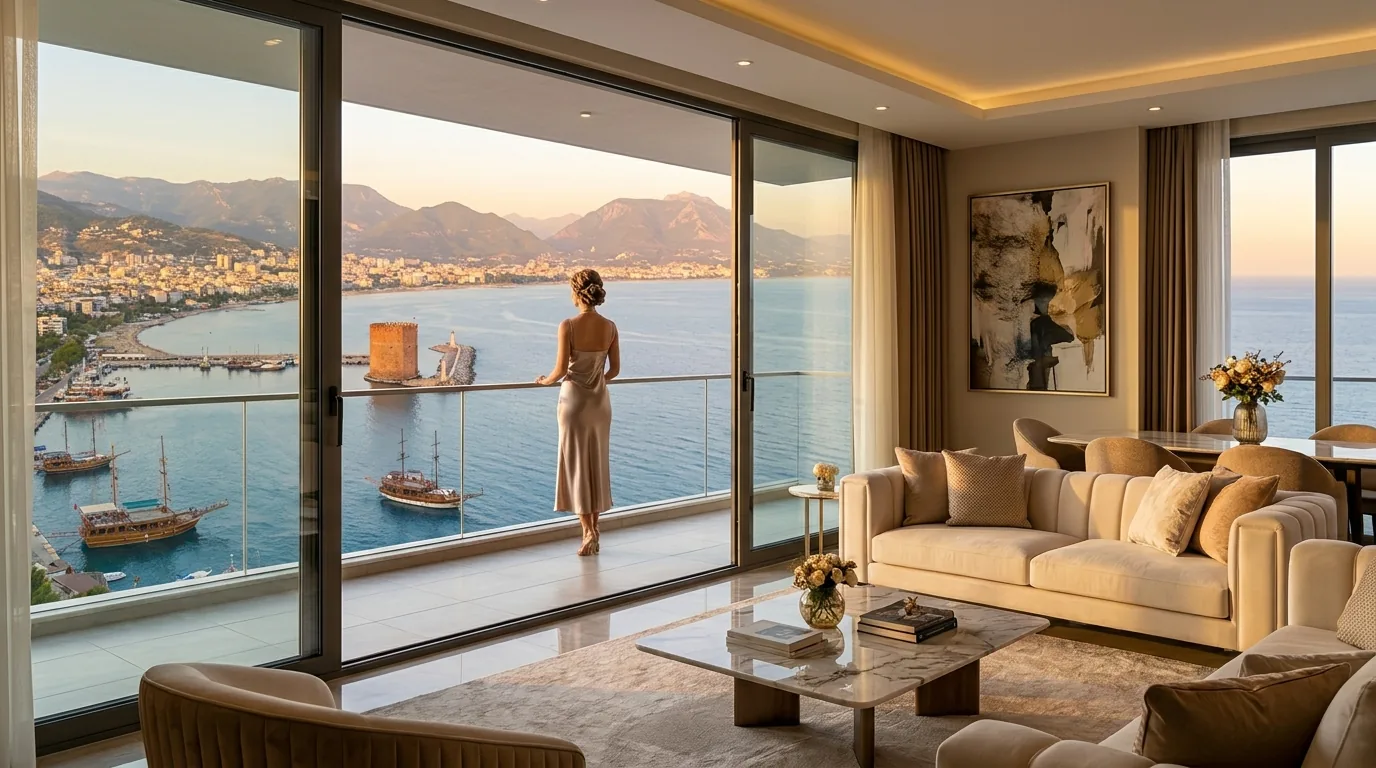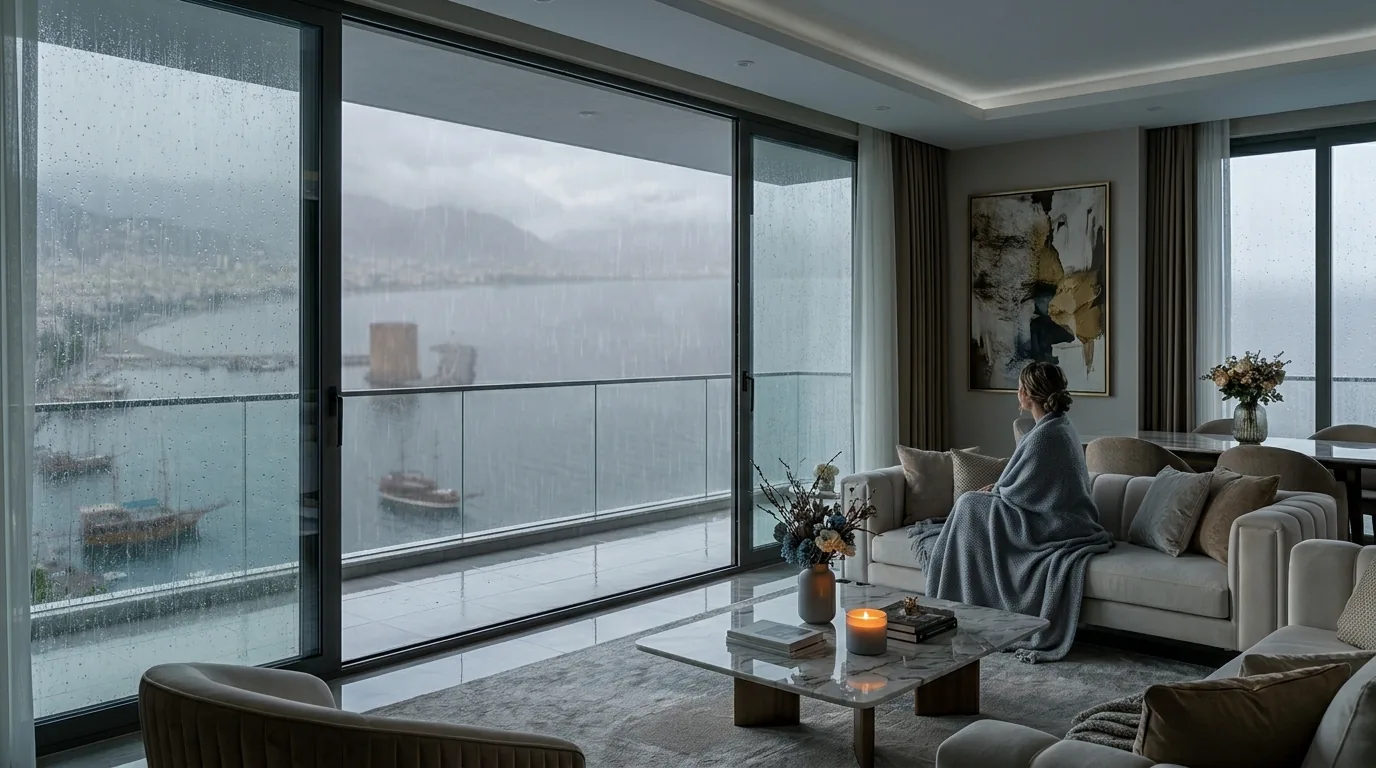
Summer in Alanya is hot and dry, and damp is the last thing on anyone's mind. Then the rains start in November and many newcomers meet a problem nobody mentioned: steamed-up windows every morning, bedding that never feels dry, dark spots in corners and behind wardrobes, and a musty smell in a closed-up flat.
At a glance
- When: November to March. December and January are the wettest months, with about 200 mm of rain and 14–15 rainy days each.
- Why: humid sea air, cold uninsulated walls, too little ventilation and no central heating.
- Healthy indoor humidity: 30–50%, and below 60%. Above 60%, mould starts to grow.
- What works: airing 2–3 times a day, a dehumidifier, the AC's Dry mode, steady heating.
- Cost: a 12–20 litre/day home dehumidifier is about TRY 15,000–21,000; electricity about TRY 150–300 a month.
- When buying: view in winter or after rain, and check corners, walls behind furniture and whether the façade is insulated.
Why Alanya apartments get damp in winter
Humid seaside climate. Alanya gets most of its annual rain in winter. Days are around 13–15 °C, nights 5–7 °C, the air is humid and there is less sun, so walls and fabrics dry slowly.
Cold, uninsulated walls. Most buildings are concrete and brick, and many façades have no insulation. When warm, moist indoor air touches a cold wall, water condenses — like droplets on a cold glass. You see it in external corners, behind furniture against outside walls, around windows, on top-floor ceilings and ground-floor walls.
No central heating. Most flats have none, and mains gas is not available everywhere. People heat with air conditioners or electric heaters, often in one room and only in the evening, so the walls stay cold.
Moisture we create. Cooking, showers, drying laundry indoors and breathing add litres of water to the air every day. With windows shut, it has nowhere to go.
Empty flats. The most common case among foreign owners: shutters closed in autumn, back in spring. With no airing or heating, humidity builds for weeks, and by April there is mould on walls, in wardrobes and on mattresses.
Signs of too much humidity
- windows steam up every morning with water on the frames;
- laundry and towels never dry properly or smell musty;
- grey or black dots in corners and behind furniture;
- bubbling or peeling paint and stains on walls;
- white bloom on shoes, bags and clothes in wardrobes;
- a stale smell, especially when you return.
A cheap hygrometer tells you the humidity. Aim for 30–50%. The US Environmental Protection Agency (EPA) recommends keeping indoor humidity below 60%, above which mould growth becomes likely.
If mould has already appeared
- Find the cause. Spots in external corners are condensation; near pipes or under the ceiling, there may be a leak — and a leak needs repairing, not just cleaning.
- Clean the surface with a mould remover (küf sökücü) from any hardware store or supermarket. Wear gloves and a mask and ventilate.
- Dry the wall completely with a dehumidifier, heating and open windows on a sunny day.
- Only then repaint, using anti-mould paint (küf önleyici boya). Painting over damp walls or live mould just brings it back within a month.
- If it keeps coming back, call a tradesperson — the façade, roof or pipes may be at fault. If you rent, tell the landlord: under Turkish law, defects that prevent normal use of the home are the owner's responsibility.
How to prevent damp: 10 simple rules
- Air the flat 2–3 times a day for 5–10 minutes with windows wide open, rather than leaving them ajar all day.
- Run a dehumidifier in the dampest room with the door closed.
- Use the AC's Dry mode (the droplet symbol) to lower humidity without much cooling.
- Heat evenly — a steady 18–20 °C is better than blasting one room in the evening.
- Move furniture 5–10 cm away from external walls.
- Don't dry laundry in living rooms — use the balcony or dry it next to the dehumidifier.
- Use extractor fans while cooking and showering and for 15–20 minutes after.
- Leave wardrobe doors ajar and use moisture absorbers inside.
- Wipe condensation off windows in the morning and check the seals.
- Check the bathroom extractor — a weak or blocked fan is a cheap fix that makes a big difference.
Heating without making damp worse
| Heating | Effect on damp | Notes |
|---|---|---|
| Inverter AC on heat mode | dries the air and warms the room | the most common and economical option in Alanya |
| Oil radiator, convector | warms but does not remove moisture | fine as a top-up; uses more electricity |
| Underfloor heating | warms floors and lower walls well | found in newer premium complexes |
| Gas boiler (kombi) | even heat throughout | where mains gas is available; such flats are usually drier |
| Portable bottled-gas heater | adds moisture as the gas burns | the worst option for damp, and unsafe in a closed flat |
A practical set-up for most flats: ACs on heat mode in the main rooms, a dehumidifier in the dampest room and airing on a schedule.
Mould and health
The World Health Organization links persistent damp and mould at home to respiratory problems — coughing, and worse asthma and allergies. Take extra care if children, older people or anyone with asthma or allergies live in the flat. A blocked nose or cough that clears when you are away and returns at home is a sign to act; see a doctor if symptoms persist, and avoid sleeping in a room with visible mould.
Damp in a new build
Even a brand-new flat can show condensation in its first winter: concrete, plaster and screed hold a lot of water and take one or two seasons to dry out. Air more than usual, run a dehumidifier for the first months, keep wardrobes off the walls, and show any recurring spots to the developer — construction defects such as leaks, cold bridges at balcony slabs or faulty ventilation should be fixed under warranty.
Winter checklist
- hygrometer in the bedroom;
- dehumidifier working, with a drain hose;
- AC units cleaned and filters washed;
- bathroom and kitchen extractors working;
- window and balcony door seals intact;
- balcony and terrace drains clear of leaves;
- furniture away from external walls;
- moisture absorbers in wardrobes;
- if you are leaving, someone arranged to check the flat.
Dehumidifiers: what to buy and running costs
| Apartment | Capacity | Approx. price (October 2026) |
|---|---|---|
| 1-bedroom, one damp room | 10–12 litres/day | about TRY 15,000 |
| 2–3 bedrooms | 20–24 litres/day | from about TRY 21,000 |
Prices are from MediaMarkt Türkiye in October 2026; other shops and sales can be cheaper.
A 12-litre model uses about 200 W and a 20-litre model about 390 W. Running 8 hours a day, that is 50–95 kWh a month — about TRY 150–300 at the current tariff of around TRY 3.24/kWh. Far cheaper than replastering and replacing furniture. More on utility bills in Cost of living in Alanya in 2026.
Look for auto shut-off when the tank is full, a built-in humidistat (set it to 50%) and a continuous drain hose outlet — essential if the flat stands empty.
If you leave for the winter
- set up a dehumidifier with a hose to a drain and the humidistat at 50–55%;
- leave wardrobe and internal doors open;
- store textiles in vacuum bags and stand mattresses so air reaches both sides;
- if safe, don't seal every window and shutter — even a ventilated gap in the bathroom helps;
- arrange for someone to visit every 1–2 weeks to air the flat, check the dehumidifier and look for leaks after storms;
- don't switch off the power completely if appliances need to run.
If you let the flat to holidaymakers in season, winter damp is a real risk to your reviews. Rules for short-term letting: Short-term rentals in Turkey: licence, tax and fines.
Choosing a flat without damp problems
| What to check | Why |
|---|---|
| External corners, walls behind furniture, ceilings by windows | old stains, or fresh paint only in the corners, deserve questions |
| Smell in closed rooms and wardrobes | a musty smell gives damp away |
| Floor | ground-floor and basement flats (bodrum kat) are at risk; top floors if the roof is poor |
| Orientation | south- and west-facing flats are brighter and drier in winter |
| Façade insulation (mantolama) | insulated walls stay warmer, with less condensation |
| Windows | double glazing and sound seals |
| Bathroom and kitchen extraction | is there a working fan? |
| Location | low-lying and seafront plots are damper; hillside flats tend to be drier |
The best tip: view the flat in winter or after a few rainy days — in summer even a problem flat looks perfect. Buying remotely? Ask for video of corners, ceilings and wardrobes, and ask directly whether there was mould last winter. New complexes are more often built with insulated façades, though even a new building can be damp in its first winter while the concrete dries. More on due diligence in How to buy an apartment in Alanya as a foreigner and New builds in Alanya.
Is damp a reason to avoid Alanya?
No. Winters are mild and sunny days are plentiful; damp is a household task, like air conditioning in summer. Thousands of foreigners live here year-round and simply run a dehumidifier from November to March. The key is to know in advance and choose a flat with winter in mind, not just the summer sea view. The full picture: Living in Alanya: pros and cons.
Looking for a year-round home without winter surprises? See Property search and purchase support or browse the catalogue.
FAQ: damp in Alanya apartments
Why are Alanya apartments damp in winter? A humid seaside climate, most of the year's rain between December and February, cold uninsulated concrete walls and no central heating. Warm, moist indoor air condenses on cold walls and windows.
What humidity should my apartment have? 30–50% is comfortable. If humidity stays above 60%, mould becomes likely. A cheap hygrometer will tell you.
Do I need a dehumidifier in Alanya? For most flats, yes, from November to March — especially ground floors, north-facing flats and flats left empty in winter.
How much does a dehumidifier cost to buy and run? A 12–20 litre/day home model costs about TRY 15,000–21,000 (October 2026). Running 8 hours a day, electricity is about TRY 150–300 a month.
Does air conditioning help with damp? Yes. Dry mode lowers humidity and heating mode warms the walls, but in very damp flats a separate dehumidifier works better.
Who deals with mould in a rented flat? Routine airing and cleaning is the tenant's job. If the cause is the building — a leak, faulty ventilation or cold walls — the landlord must fix it.
How can I spot a damp problem when buying? View in winter or after rain, check corners, walls behind furniture, wardrobes and the smell, and ask about façade insulation and ventilation. Fresh paint only in the corners is a warning sign.
Sources: Alanya climate by month — weather2travel.com; indoor humidity guidance — US EPA (via Colorado Department of Education mould and moisture Q&A); health effects — WHO Guidelines for Indoor Air Quality: Dampness and Mould (2009); prevention advice — EmlakDream (13.10.2026); dehumidifier prices — MediaMarkt Türkiye (October 2026); electricity tariff — Milliyet (April 2026); landlord and tenant duties — Turkish Code of Obligations, Articles 301 and 317. For general information only.