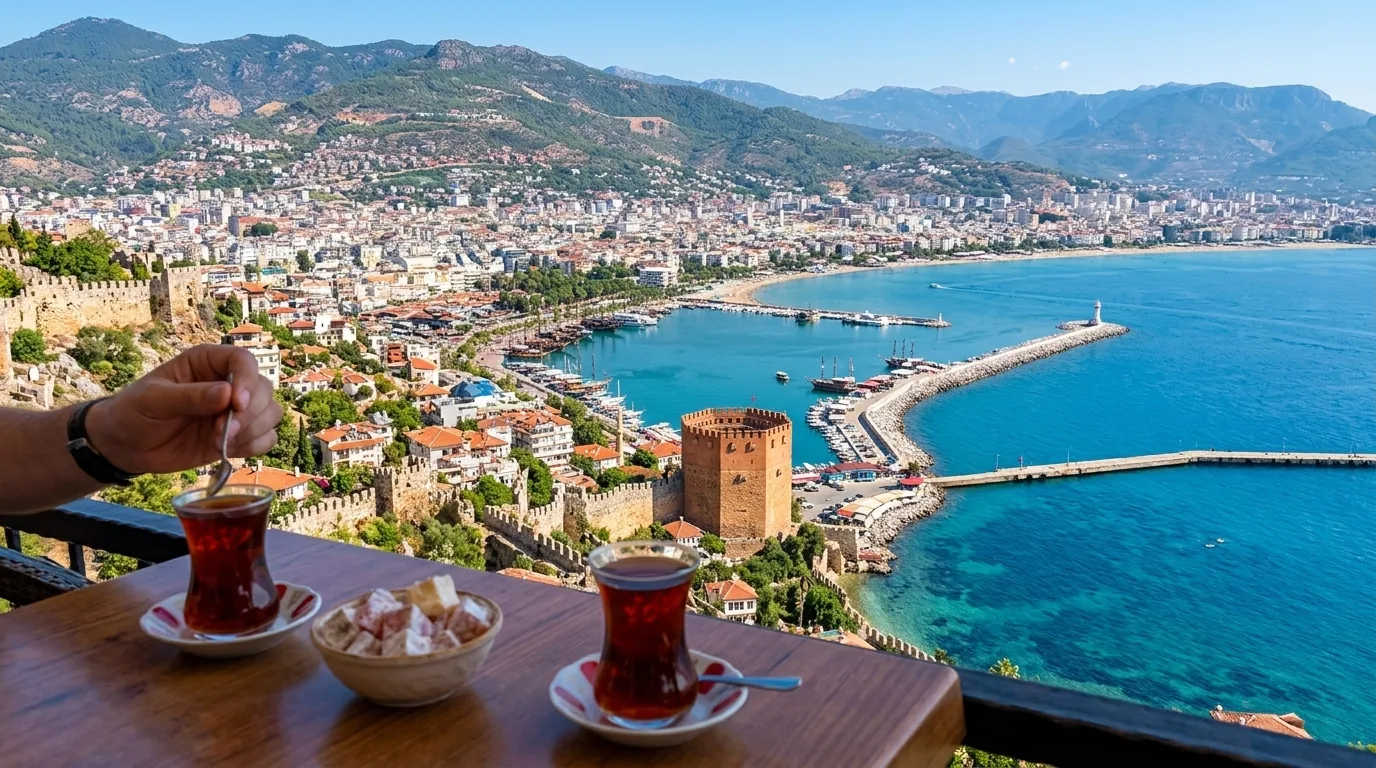
Most of what you read about Alanya is written in summer: the sea, Cleopatra Beach, the castle on the rock and sunsets over the harbour. Living here also means January downpours, August heat, cafés closed for winter, queues at the migration office and building sites next door. We live and work in Alanya and help people move here every week, so here is an honest picture of the town all year round — what we love, what drives us mad, and who it really suits.
Alanya at a glance
- Where: the eastern end of the Antalya coast, about 40 km from Gazipaşa-Alanya Airport and around 130 km from Antalya Airport.
- Population: around 370,000 permanent residents, many times more in summer.
- Who lives here: Turks plus large Russian-speaking, German, Scandinavian, Ukrainian, Iranian, British and Dutch communities — one of the most international towns in Turkey.
- Beaches: in 2026, 79 Blue Flags were awarded in Alanya — 6 public beaches, 68 hotel beaches, 4 tour boats and a marina.
- Cost of living: a couple renting a two-bedroom flat needs about TRY 64,000 a month (around USD 1,300). Full breakdown in Cost of living in Alanya 2026.
The pros of living in Alanya
1. Summer lasts half the year
In July and August days reach around 31 °C, nights about 20 °C, and the sea warms to 28–29 °C. Swimming season runs from May to November, with the sea still around 25 °C in October and 22 °C in November. Winter days are usually 13–17 °C and snow by the sea is rare. Locals joke that winter here is just a "cool autumn".
Sunshine is generous: 12–13 hours a day in summer and still about five in January. For anyone moving from the UK, Germany or Scandinavia, that alone is often the deciding factor.
2. Sea and nature within walking distance
From almost any district you can walk to the beach or drive there in 10–15 minutes. Public beaches are free, with showers and changing cabins, and Cleopatra Beach regularly makes lists of Turkey's best beaches.
Behind the town rise the Taurus Mountains: Sapadere Canyon, the Dim River with restaurants built over the water, caves, waterfalls and the high plateaus (yayla) where locals escape the summer heat. Beach in the morning, cool mountain air in the afternoon, the promenade in the evening.
3. An active lifestyle all year
Alanya suits people who like to move. A cycle path and promenade run for kilometres along the sea. Year-round swimming, paddleboarding, diving, mountain hiking, tennis, padel and beach yoga are all popular. Every large district has gyms, at about TRY 3,400 a month. European sports clubs hold winter training camps here — which says more about the climate than any brochure.
4. A real town, not just a resort
Alanya does not shut down in October. It has:
- a state teaching hospital (Alanya Eğitim ve Araştırma Hastanesi) and several private hospitals, some with English- and Russian-speaking staff;
- two universities, the state Alanya Alaaddin Keykubat University and the private Alanya University;
- state and private schools and nurseries;
- big supermarkets, shopping centres and a weekly market in every district;
- banks, notaries, the tax office and the migration office — you rarely need to go to Antalya.
The centre, Oba and Mahmutlar are busy all year, not just in season.
5. A big international community
Settling in is easy. Many shops, clinics, agencies and tradespeople speak English, German or Russian. There are neighbourhood groups, clubs, Turkish courses, volunteer and parent networks. New friendships come quickly, and the first months feel far less lonely than in a purely Turkish town.
Alanya is still very much a Turkish town, with its own markets, tea houses, festivals and neighbourly hospitality. Many foreigners say locals are used to expats and genuinely welcoming.
6. Food
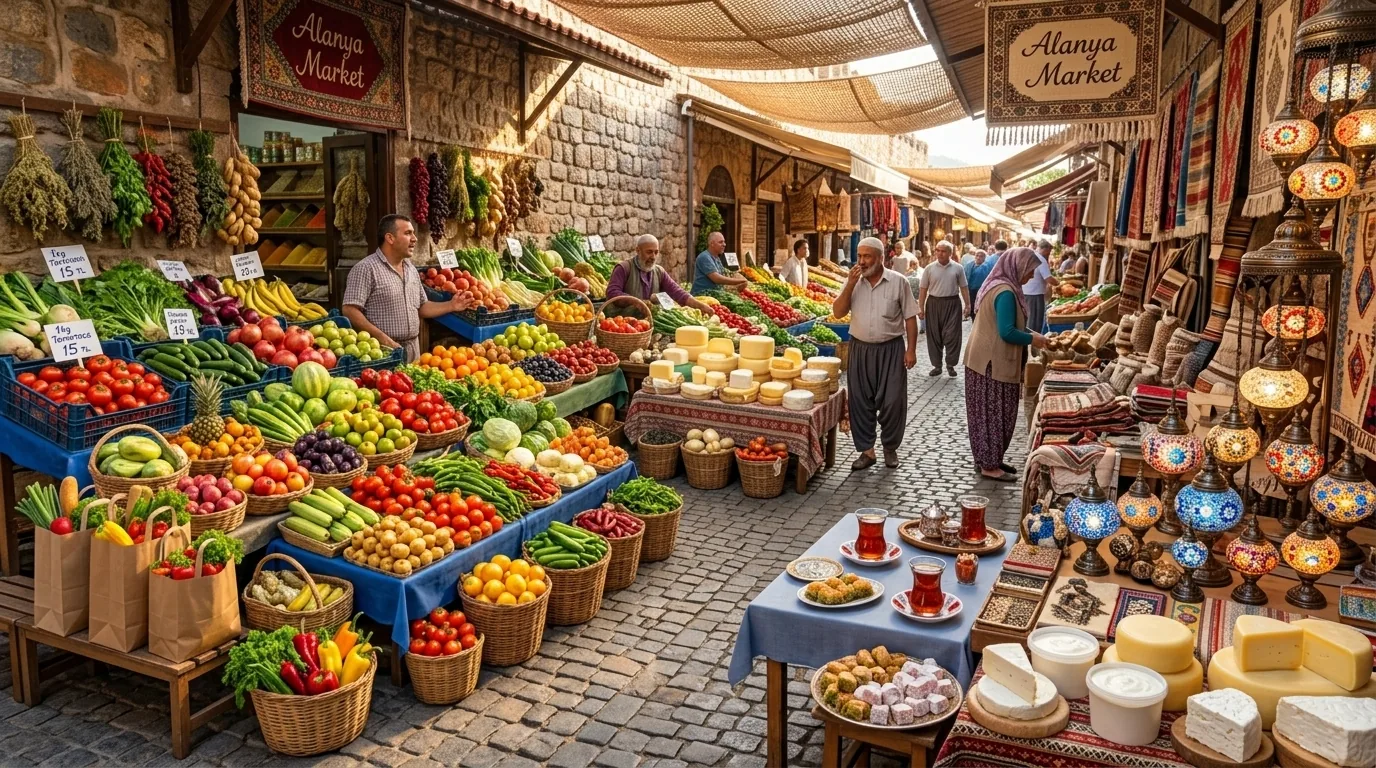
Fresh vegetables and fruit all year, local bananas and citrus, Mediterranean fish, olive oil, cheese and bakeries. The weekly market (pazar) is cheaper and tastier than the supermarket, and simple Turkish eateries — lokanta, pide salonu, köfteci — serve a good lunch for about TRY 350.
7. A district for every lifestyle
- Centre, Cleopatra, Saray — walk to Cleopatra Beach, cafés and the promenade; a proper town feel.
- Oba, Tosmur, Cikcilli — quiet residential areas close to the centre, with schools and shops.
- Mahmutlar — a town of its own, with a huge choice of apartments and a lively international crowd.
- Kestel, Kargıcak, Bektaş, Tepe — sea views, new developments, villas and more privacy.
- Avsallar, Konaklı, Türkler — calmer, further from the centre, closer to Antalya.
More on each area in our Alanya districts guide.
8. Affordable homes by European standards
The average apartment in Alanya is listed at about USD 119,000, roughly USD 1,290 per square metre — a fraction of what you would pay on the Spanish, Italian or French coast with a similar climate. Owning removes your biggest monthly cost, and in dollar terms prices were roughly flat over the past year. District-by-district figures are in Alanya property prices 2026.
9. Easy for remote work
Fibre broadband is available in most residential districts: 100 Mbps costs about TRY 410–810 a month and gigabit TRY 700–1,050. Mobile 4.5G covers the town and coast. The UTC+3 time zone works well for both Europe and the Gulf. There are coworking spaces in the centre and Mahmutlar, and many cafés are laptop-friendly, which is why Alanya is popular with freelancers and online entrepreneurs.
10. Children and schools
Families have several options:
- state schools — free and taught in Turkish; young children usually become fluent within a year or two;
- private Turkish schools — stronger English, small classes and after-school activities;
- private and international schools — from about TRY 386,000 a year; the choice is limited, so book early;
- nurseries — state and private; a private nursery costs about TRY 40,000 a month.
Children also get the sea, sport and outdoor life almost all year: football, swimming, tennis, dance and music schools are found in every large district.
11. Getting around without a car
Dolmuş minibuses run every 5–10 minutes along the whole coast, a city bus ride costs about TRY 40 with an Alanya Kentkart, and taxis start at about TRY 140. The centre, Oba, Tosmur, Cleopatra and Mahmutlar are easy to live in without a car. You will mainly need one in the hill districts — Bektaş, Tepe, Kargıcak.
12. A calm everyday life
Alanya is a small, generally calm town where life revolves around family, neighbours and the local district. Families stroll the promenade late into the evening, stallholders at the market know their regulars, and building managers and tradespeople soon remember you. For many newcomers, that "small town by the sea" feeling becomes the biggest plus of all.
The cons of living in Alanya
1. Summer heat and humidity
From mid-July to mid-September, days can top 35 °C with high humidity. Air conditioning is a must, and summer electricity bills can double or triple. Many locals head for the mountains or live "between the AC and the sea". If you struggle with heat, summer can be hard going.
2. Winter is not a holiday
From December to February it rains a lot — around 15 rainy days in January, with heavy downpours and wind. Turkish homes rarely have central heating, so flats can feel cool and damp. People heat with air conditioners, electric heaters and sometimes gas.
Tip: when choosing a home, check the orientation, insulation, window quality and whether every room has an AC unit. A south-facing, sunny flat is far more comfortable in winter.
3. Seasonality
Some cafés, beach clubs and shops in the tourist areas close in winter, and there are fewer flights into Gazipaşa. The centre, Oba and Mahmutlar stay lively, but smaller coastal areas and resort villages can feel empty off-season. In summer it is the opposite: crowds, traffic and no parking near the beach.
4. Rising prices and rents
Turkish inflation was 29.73% in September 2026, and housing and utilities rose 40% over the year. The average long-term rent in Alanya is about TRY 26,000 a month, up roughly a quarter in a year. If your income is in pounds, euros or dollars, the exchange rate offsets much of this, but you will still review your budget more often than at home.
5. Paperwork and residence permits
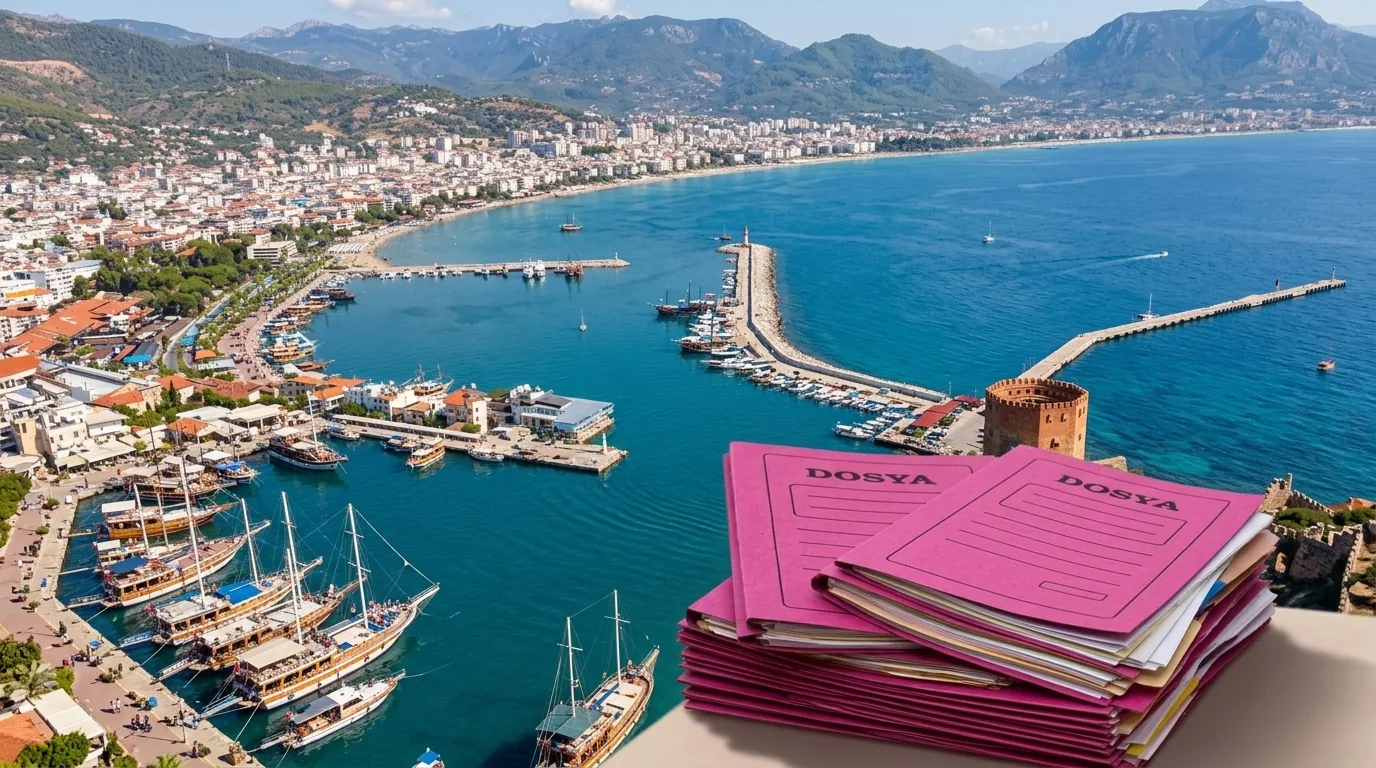
To stay longer than 90 days you need a residence permit, and some neighbourhoods are periodically closed to foreigner registration. The rules change: tourist permit renewals have become stricter, and a property-based permit now requires a purchase of USD 200,000 or more. See our guides to residence permit types and the documents checklist.
6. Work
The local job market for foreigners is limited. You can only work legally with a work permit, and salaries are Turkish — the net minimum wage in 2026 is TRY 28,075 a month. Most foreigners here work remotely, live on pensions or passive income, or run their own business. If you plan to find a job locally, think it through before you move.
7. Construction and noise
New complexes keep going up in Mahmutlar, Kargıcak and Kestel, and noise, dust and lorries can last for years. If quiet matters, find out what is planned on the neighbouring plot and view the property on a weekday, not a Sunday.
8. Healthcare: good, with caveats
The state hospital works well, but queues and the language barrier are real. Private clinics are more convenient but cost more, and basic residence permit insurance comes with limits. For complex cases you may need to go to Antalya. Choose your health insurance carefully, not just on price.
9. Language
Life is easier — and often cheaper — with some Turkish, from the market to the building management, the plumber or a government office. You can manage without it, but everything takes longer at first and you will often need a translator. Turkish courses are available at every level.
10. Getting to and from home
Gazipaşa is a small airport with few direct flights in winter. Most routes go via Antalya, about two hours away by transfer. If you fly often for work or family, factor in the logistics.
11. Earthquake risk and building quality
Turkey is seismically active, and Alanya is no exception. New buildings follow modern codes, but the town also has many blocks from the 1990s and earlier. When buying or renting, check the build year, the occupancy permit (iskan) and compulsory earthquake insurance (DASK). Buildings from after 2000 — and especially after the 2018 code update — are the safer choice. We always check a building's paperwork before a deal.
Alanya or Antalya?
We are asked this all the time. In short:
- Alanya is smaller, calmer and closer to the sea, with an easy international community and rents about 12% lower (median around TRY 21,000 versus TRY 24,000 in Antalya).
- Antalya is a big city, with more jobs, international schools, shopping and culture, and a major airport with direct flights all year.
If sea, climate and a relaxed pace come first, choose Alanya. If you need city infrastructure and fly often, Antalya may suit you better.
Who Alanya suits
A good fit for:
- remote workers who want sun and sea most of the year;
- families who value beaches, sport and an international environment;
- retirees who prefer a mild winter, the sea and a calm pace to big-city infrastructure;
- buyers who want a home they can use themselves and rent out.
Think twice if:
- you struggle with heat and humidity;
- you need big-city life all year — theatres, major business hubs, a wide choice of international schools;
- you are counting on a local job;
- you fly often and need direct flights in winter.
Try it before you move
The best test is to spend at least one winter month in Alanya before you buy. Rent in the district you like, shop at the markets, time the walk to the beach and the drive to the hospital and school, spend a January evening at home and try the trip to Gazipaşa and Antalya. If you still love it then, it is the place for you.
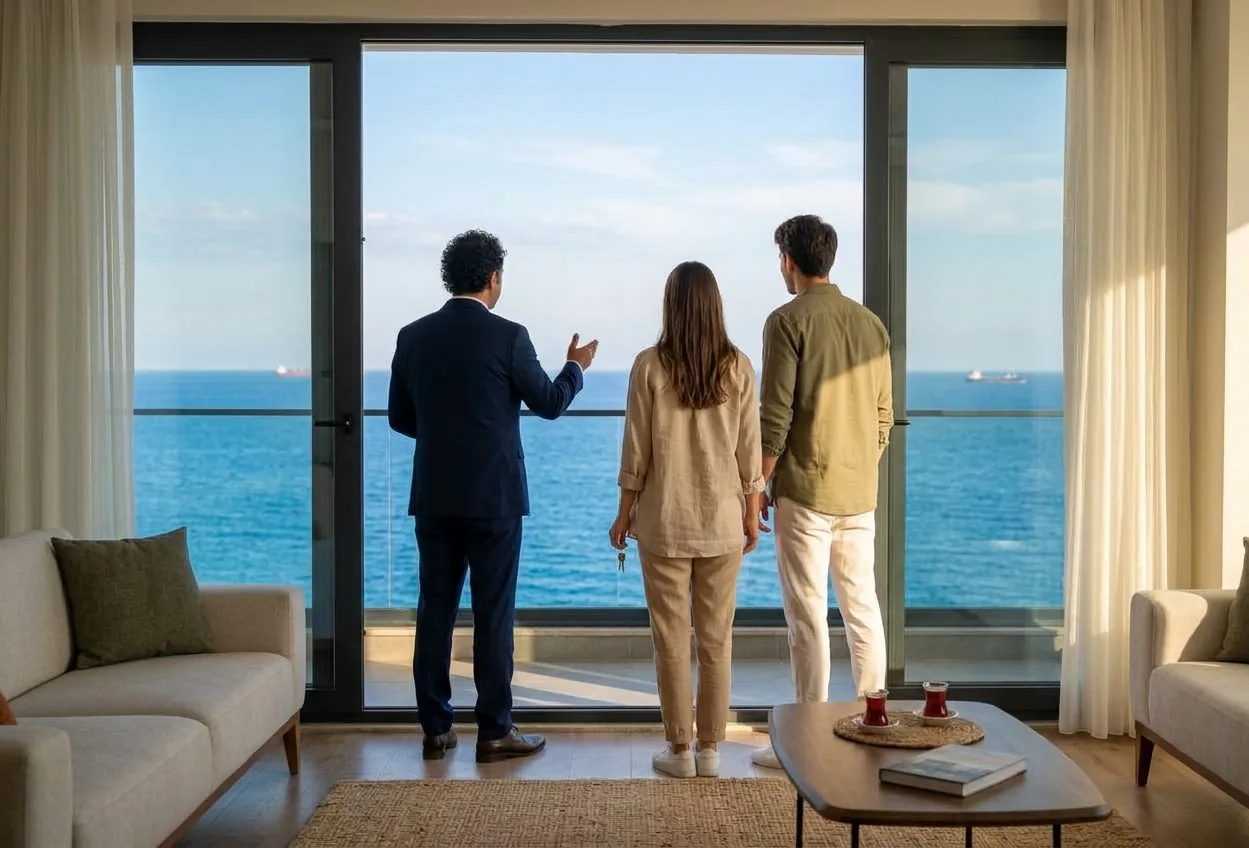
When you are ready to look at homes, browse our Alanya property catalogue. We will show you properties in districts that fit your lifestyle and tell you honestly about each one — including how the flat will feel in August and in January.
FAQ: living in Alanya
Is Alanya a good place to live all year round? Yes, if you are happy with hot summers and mild but rainy winters. The centre, Oba and Mahmutlar are lively all year. The downsides are July–August heat, damp winters and seasonality in smaller areas.
What are the main pros and cons of living in Alanya? Pros: the climate, the sea within walking distance, nature, an international community and homes that are affordable by European standards. Cons: summer heat, damp winters without central heating, seasonality, rising prices, residence permit paperwork and a limited job market.
What is the weather like in Alanya in winter? Days are usually 13–17 °C and nights 5–8 °C. December to February is the rainy season, with around 15 rainy days in January. The sea stays at about 17–18 °C.
What is the best area to live in Alanya? It depends on your lifestyle: the centre and Cleopatra for town life, Oba and Tosmur for quiet near the centre, Mahmutlar for choice and community, Kestel, Kargıcak and Bektaş for views and new developments.
Is Alanya or Antalya better to live in? Alanya is calmer, closer to the sea and about 12% cheaper to rent. Antalya is a big city with more infrastructure, jobs and year-round direct flights.
Is Alanya good for retirees? Yes — it is one of the most popular places for European retirees: mild winters, the sea, healthcare, quiet districts and a big community. Choose a home close to amenities and think carefully about health insurance.
Can foreigners find work in Alanya? To a limited extent. You need a work permit, and salaries are local. Most foreigners work remotely or run their own business.
Sources: climate averages — Weather2Travel; Blue Flags — Yeni Birlik, June 2026; rents — Emlakjet and KiraMetre, October 2026; property prices — Emlakjet, October 2026; inflation — TurkStat, September 2026. Information current as of October 2026.